Browse by city
| Frosinone |
| Latina |
| Rieti |
| Roma |
| Viterbo |
 Roma
Roma
Theatre
 |
|
Roma
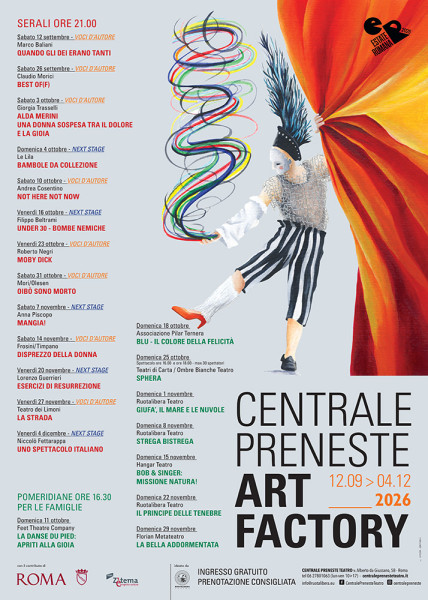
Centrale Preneste Teatro |
| from september 12 to december 4 2026 |
| Quando gli dei erano tanti – Marco Baliani |
|
|
 |
|
Ripi
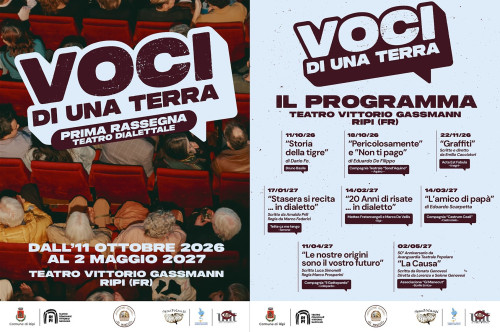
Teatro Comunale Vittorio Gassman Ripi |
| from october 11 2026 to may 2 2027 |
| VOCI DI UNA TERRA - la prima rassegna di teatro dialettale |
|
|
 |
|
Ostia
Teatro del Lido |
| from october 12 to december 22 2026 |
| SomministrArte |
|
|
 |
|
Roma
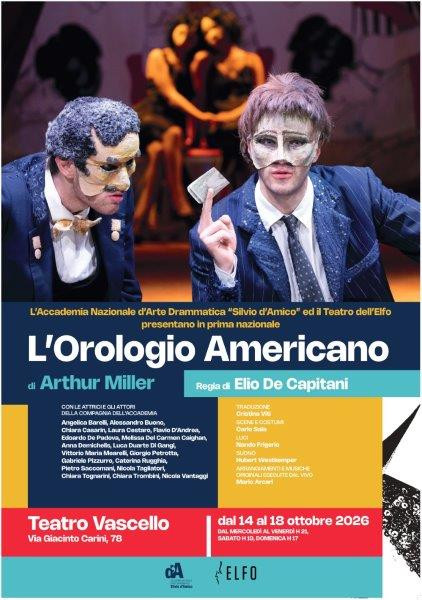
Teatro Vascello |
| from october 14 to november 1 2026 |
| L’orologio americano – Arthur Miller, regia Elio De Capitani |
|
|
 |
|
Roma
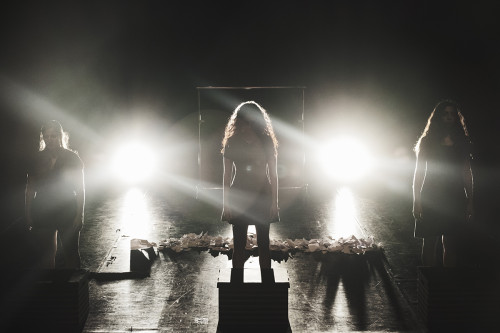
Centrale Preneste Teatro |
| from october 17 to november 28 2026 |
| Mi ricordo – Barbe à Papa Teatro |
|
|
The event has already ended, but you can keep discovering what to do in Lazio.
Check out the upcoming events in Lazio, discover the events in Roma or visit the page of OFF/OFF Theatre to find out about upcoming shows.
 Theatre
|
from wednesday 11 till domenica 15 marzo 2026
|
|
387 views

Unmissable live shows and events
Sponsored events
All free entry events
All exhibitions
Today's events a Roma PDF format.

Cerca gli spettacoli online e vivili offline: il Tacco di Bacco è uno strumento pensato per migliorare la qualità della nostra vita. Un'esistenza piena si basa su connessioni autentiche, che crediamo nascano solo nel mondo reale.Per questo abbiamo creato un'agenda che orienta, non una app che trattiene. Noi vi diamo il mezzo, voi trovate il fine.
La redazione declina ogni responsabilità nel caso in cui le informazioni fornite su iltaccodibacco.it siano errate, mancanti o incomplete.
Designed and made in Italy - 2026 © - il Tacco di Bacco
Se hai stampato queste pagine, ricordati di cestinarle nel raccoglitore della carta.
If you print these pages don't forget to trash them in a recycle bin.





















 Buy the ticket
  Share
Share