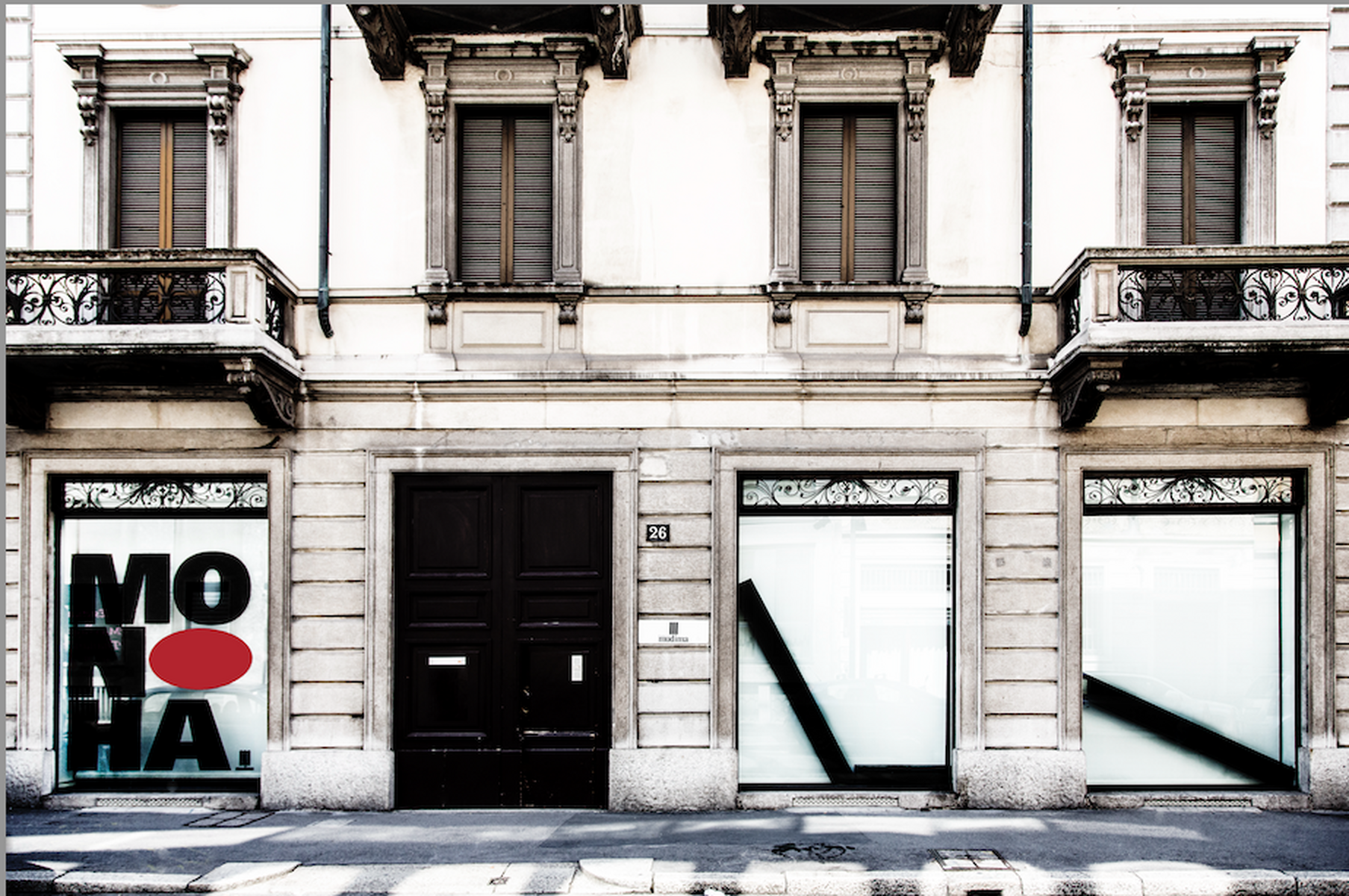
The Mudima Foundation presents INNOCENT WEAPON, Nicola Mette’s new performance which explores the unstable boundary between innocence and violence, play and threat, participation and indifference.
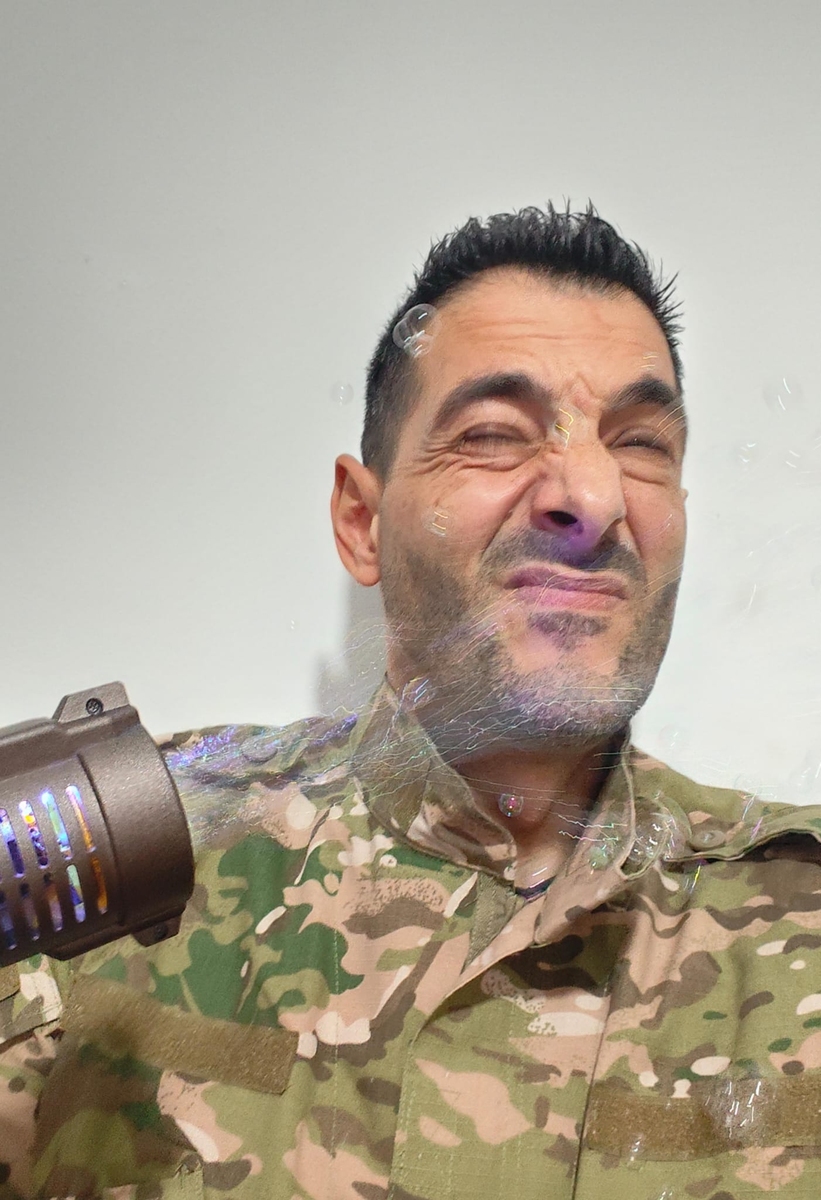
At the heart of the piece lies an object from the world of childhood: a soap-bubble gun. A device associated with light-heartedness and wonder, which is stripped of its usual function to take on a new and ambiguous dimension. What begins as a game becomes the starting point for a reflection on the vulnerability of life and the violence that pervades the present.
Dressed in white and barefoot, the artist constructs a minimalist performance, centred on the relationship between body, space and audience. Soap bubbles drift through the space, multiplying in a sequence of appearances and disappearances. The audience is gradually drawn in, becoming part of a performance in which the distinction between performer and observer becomes increasingly blurred.
Blood, a vital element drawn from the artist’s body, bursts into the image of the game. Its presence introduces a fracture in the initial whiteness, transforming the surface of the body and the space beneath it into sites of a material trace. Not merely a visual effect, but a reference to the concrete dimension of life, to its exposure and to the possibility of loss.
A bubble is a fragile, temporary form, destined to disappear. For a moment, it contains a portion of space, reflects light and projects a shifting image of the world. Its bursting brings that fragile permanence to an end. This image encapsulates a reflection on the precariousness of existence, particularly that of children, whose lives are cut short or overwhelmed by wars and conflicts they did not choose.
In INNOCENT WEAPON, war is not depicted directly. There are no images of battles nor re-enactments of violence. The conflict emerges through a poetic and unsettling device in which a harmless object takes on a different potential meaning. The tension of the work develops primarily in its relationship with the audience: the distance between the observer and what is happening, between the suffering of others and the perception of a reality that often remains distant, is called into question.
The audience is not simply called upon to watch. Their presence becomes part of the very structure of the action, transforming the performance into a shared experience. The spectator thus finds themselves confronted with their own position, their own perception and the way in which they react to what is happening around them.
The viewer is thus confronted with their own position, their own perception and the way in which they react to what is happening around them.
The title contains an intentional contradiction. INNOCENT WEAPON brings together two seemingly irreconcilable dimensions. The weapon belongs to play, to childhood, to a world in which an action should be without consequences. But when play encounters blood, that supposed innocence is shattered. The object becomes a metaphor for violence that invades even the symbolically protected spaces of childhood.
The performance forms part of Nicola Mette’s research into the body as a site of memory, exposure and conflict. This journey encompasses works such as *Petrificadas Emoziònes – Homines Contra Homines*, created at the former Acciaierie Lombarde Falck steelworks in Sesto San Giovanni, where a doll filled with blood is subjected to a repeated and violent act, evoking a shattered childhood and the wounds of history, and *Bocceddu (Paradiso), presented in Piazza Sebastiano Satta in Nuoro, in which the traditional children’s game is transformed into a collective ritual on life and death.
With *INNOCENT WEAPON*, Mette continues this exploration, shifting the focus from the representation of violence to its perception, from the individual body to the collective dimension. Play becomes a critical tool, the body a surface for testimony, and the audience an integral part of a reflection that offers no pre-determined answers.
One question remains, suspended between the action and the gaze of those taking part: to what extent are we still capable of recognising violence when it manifests itself before our very eyes?
Biographical note
Nicola Mette is a Sardinian artist and performer who lives and works between Milan and Sardinia. For over twenty-seven years, he has been developing his practice in the field of performance art, having staged around 130 performances/actions in various contexts and locations.
His practice explores the transformations of individual and collective behaviour, traversing intimate, social, political and geopolitical dimensions. In his work, he addresses issues relating to sexuality, identity, diversity, inner conflicts and the tensions between the individual and society, extending his inquiry to the relationship between human beings and nature. His research moves between the personal and collective spheres, highlighting the contradictions, conventions and mechanisms of power that govern human behaviour and relationships.
The body is the primary field of investigation and the tool through which the artist constructs his actions. Mette does not merely observe or denounce the contradictions of the external world: he chooses to expose himself personally, drawing on his own intimacy, physicality and experience. Through performative gestures, he takes upon himself those conditions that society tends to marginalise, conceal, judge or define as deviations from the norm.
His research does not seek to make moral judgements or propose ready-made answers. Rather, it challenges the boundaries between normality and diversity, the private and the public, the individual and the collective, bringing to light what often remains invisible or is deliberately suppressed.
Through actions, everyday objects, extreme gestures and participatory situations, the artist constructs performative devices in which the body becomes a site of conflict, testimony and transformation. The autobiographical dimension intertwines with the social and political, generating images that do not necessarily seek to represent reality, but rather to challenge its perceptions and conventions.
His work takes the form of an independent, critical and uncompromising artistic practice, in which personal exposure becomes a tool for questioning the fragility of the human condition and the contradictions of the present.
Web:
www.mudima.net

 Milano


 Art & photography
 0229409633























 Share
 Add to your calendar