Browse by city
 Bari
Bari
Browse by city
Classical music
 |
|
Bari
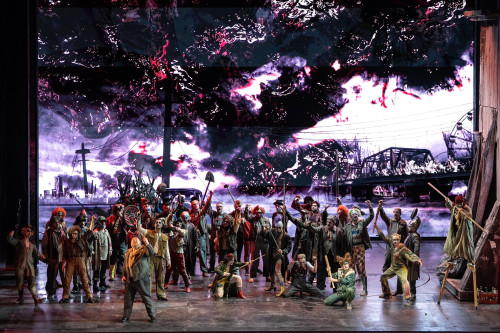
Teatro Petruzzelli |
| from october 18 to october 27 2026 |
| Il Trovatore di Giuseppe Verdi |
|
|
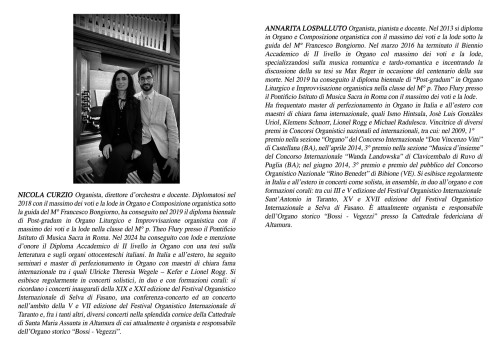 |
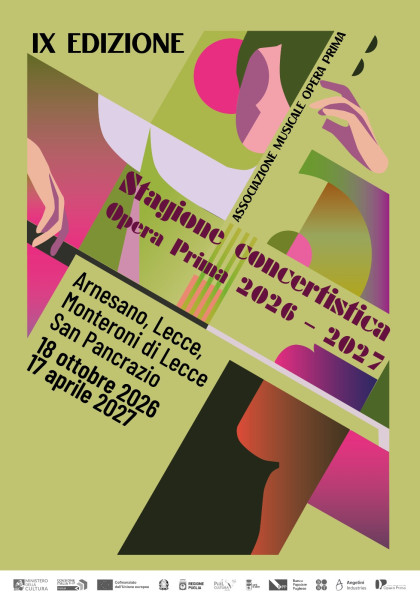
| Alberobello |
| Saturday october 24 2026 |
| Concerto organo a 4 mani |
|
|
 |
|
Arnesano
Teatro “Oratorio Don Orione” |
| Saturday october 24 2026 |
| Paesaggi sonori: da Grieg a Prokofiev – Matteo Fabi e Maya Oganyan |
|
|
 |
|
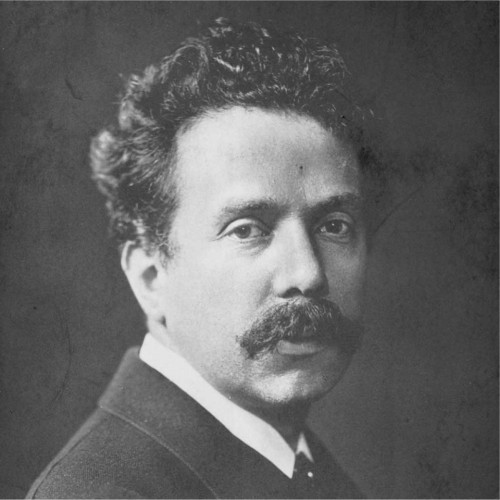
Bitonto
Teatro Tommaso Traetta |
| Saturday october 24 2026 |
| LE RADICI DI TRAETTA |
|
|
 |
|
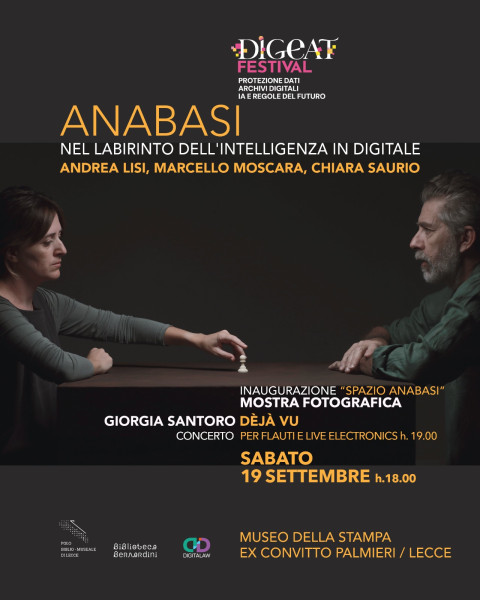
Bari
Auditorium "Nino Rota" |
| Saturday october 24 2026 |
| Robert Kahn (1865–1951) – Naturalezza musicale in un sistema snaturato |
|
|
 |
|
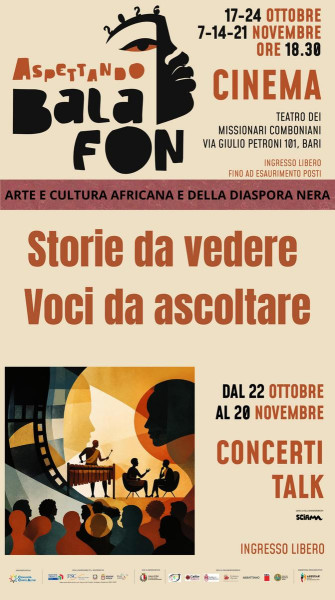
Lecce
Biblioteca provinciale “Nicola Bernardini” (ex Convitto Palmieri) |
| from september 19 to november 30 2026 |
| Spazio ANABASI – Déjà vu, concerto di Giorgia Santoro |
|
|
 |
| Bari |
| from october 22 to october 24 2026 |
| Aspettando Balafon Film Festival 2026 |
|
|
 |
|
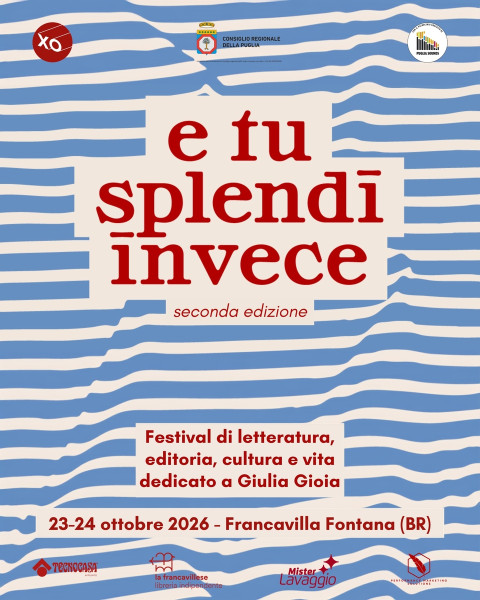
Francavilla Fontana
Teatro Italia |
| from october 23 to october 24 2026 |
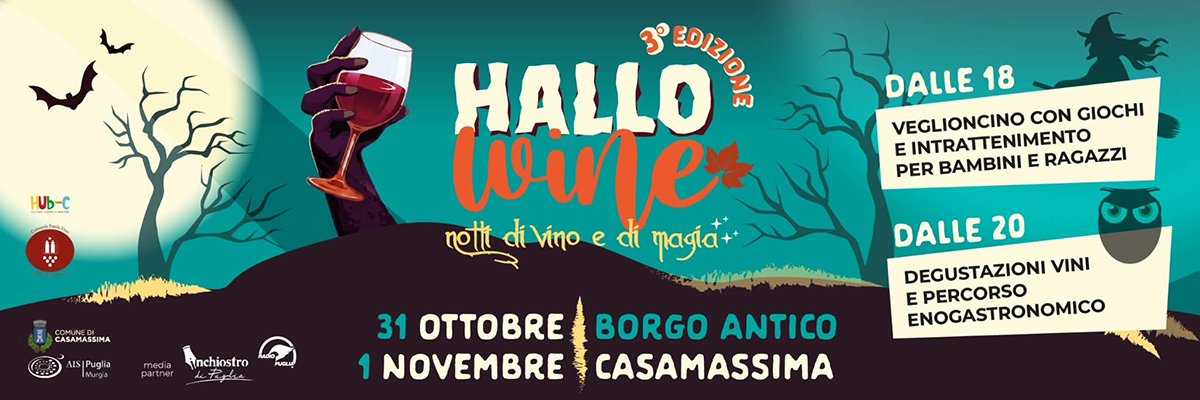
| E TU SPLENDI INVECE festival (seconda edizione) |
|
|
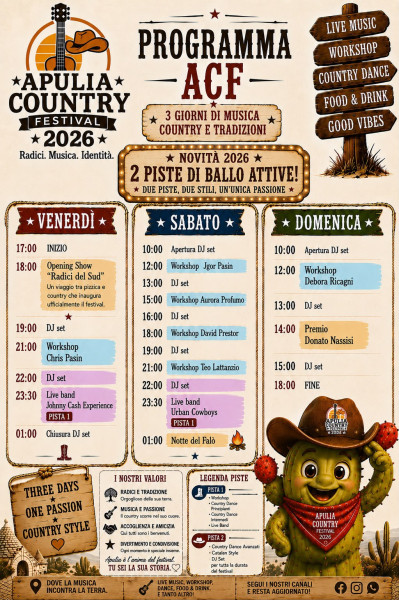 |
| Nardò |
| from october 23 to october 25 2026 |
| Apulia Country Festival con Urban Cowboys |
|
|
| Bari |
| Wednesday april 22 2026 |
| Fantasia - Filippo Balducci |
|
|
| Bari |
| Wednesday may 6 2026 |
| Mamma oca e altre storie - Annamaria Fortunato e Rebecca Ventrella |
|
|
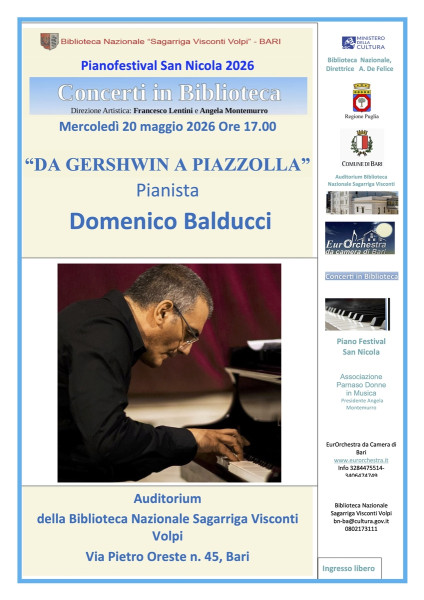 |
| Bari |
| Wednesday may 20 2026 |
| Da Gershwin a Piazzolla - Domenico Balducci |
|
|
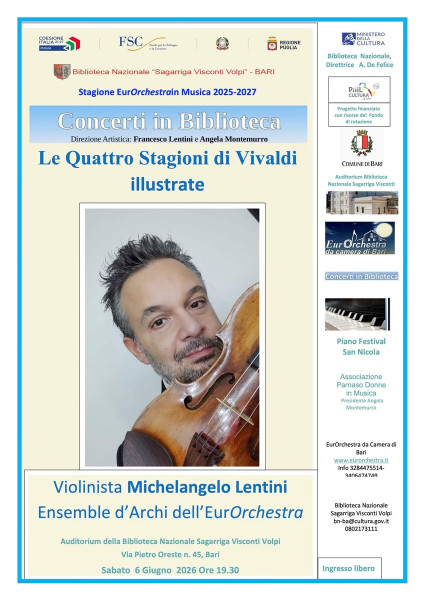 |
| Bari |
| Saturday june 6 2026 |
| Le Quattro Stagioni - Michelangelo Lentini |
|
|
| Bari |
| Thursday october 1 2026 |
| Donne in Musica Protagoniste |
|
|
| Bari |
| Sunday october 11 2026 |
| Domenica di Carta |
|
|
| Bari |
| Wednesday october 21 2026 |
| In The Pink - Musiche di Henry Mancini |
|
|

 Classical music
 Live music

Unmissable live shows and events
Sponsored events
All free entry events
All exhibitions
Today's events a Bari PDF format.

Cerca gli spettacoli online e vivili offline: il Tacco di Bacco è uno strumento pensato per migliorare la qualità della nostra vita. Un'esistenza piena si basa su connessioni autentiche, che crediamo nascano solo nel mondo reale.Per questo abbiamo creato un'agenda che orienta, non una app che trattiene. Noi vi diamo il mezzo, voi trovate il fine.
La redazione declina ogni responsabilità nel caso in cui le informazioni fornite su iltaccodibacco.it siano errate, mancanti o incomplete.
Designed and made in Italy - 2026 © - il Tacco di Bacco
Se hai stampato queste pagine, ricordati di cestinarle nel raccoglitore della carta.
If you print these pages don't forget to trash them in a recycle bin.


















 Share
Share