"Evening came, and morning followed"
In Martina Franca, a journey through art, fashion, music, and thought
There are projects that develop like maps and others like narratives. "Evening came, and morning followed" belongs to the latter dimension: a cultural path that unfolds in time and space, guiding Martina Franca from April 30 to June 6, 2026, in an itinerary made up of intertwined languages and shared visions.
The program takes shape in the symbolic locations of the city — the Ducal Palace, the Conservatory of Santa Maria della Misericordia, the Isidoro Chirulli Library — transforming them into traversable spaces filled with experiences that connect art, fashion, music, literature, and research.
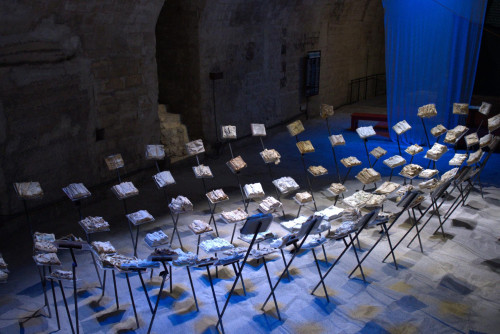
Opening the journey on April 30 is Regina Schrecker, a prominent figure on the international scene, who will present "Elogio della bellezza sostenibile" in the noble halls of the Ducal Palace. This exhibition tells a story through images and creations that traverse different eras and imaginaries: garments, costumes, and objects inspired by Dante, Andy Warhol, Basquiat, Arnaldo Pomodoro, and up to the most recent experiments related to artificial intelligence. It is a living archive capable of restoring the continuity between tradition and innovation.
Literature is integrated into the program as a space for reflection and storytelling. Presentations guide the audience through paths touching on biographies, contemporary anxieties, and collective memories: from the last hours of Edith Piaf recounted by Teresa Caricola to the inner landscapes and the paths of medieval pilgrimage evoked by Marino Pagano and Angelo Palmieri, culminating in the writing of Rossella Dentuto, which navigates between identity and transformation. The literary presentations will be led by Cinzia Cofano, a teacher, cultural operator, and writer who won the "Premio Adriatico. Un mare che Unisce" in 2024, and is also the curator of the cultural column "Librinstreaming." She will collaborate with Tony Vinci, who will cover all scheduled events with the cameras of Valleditrialivechannel.
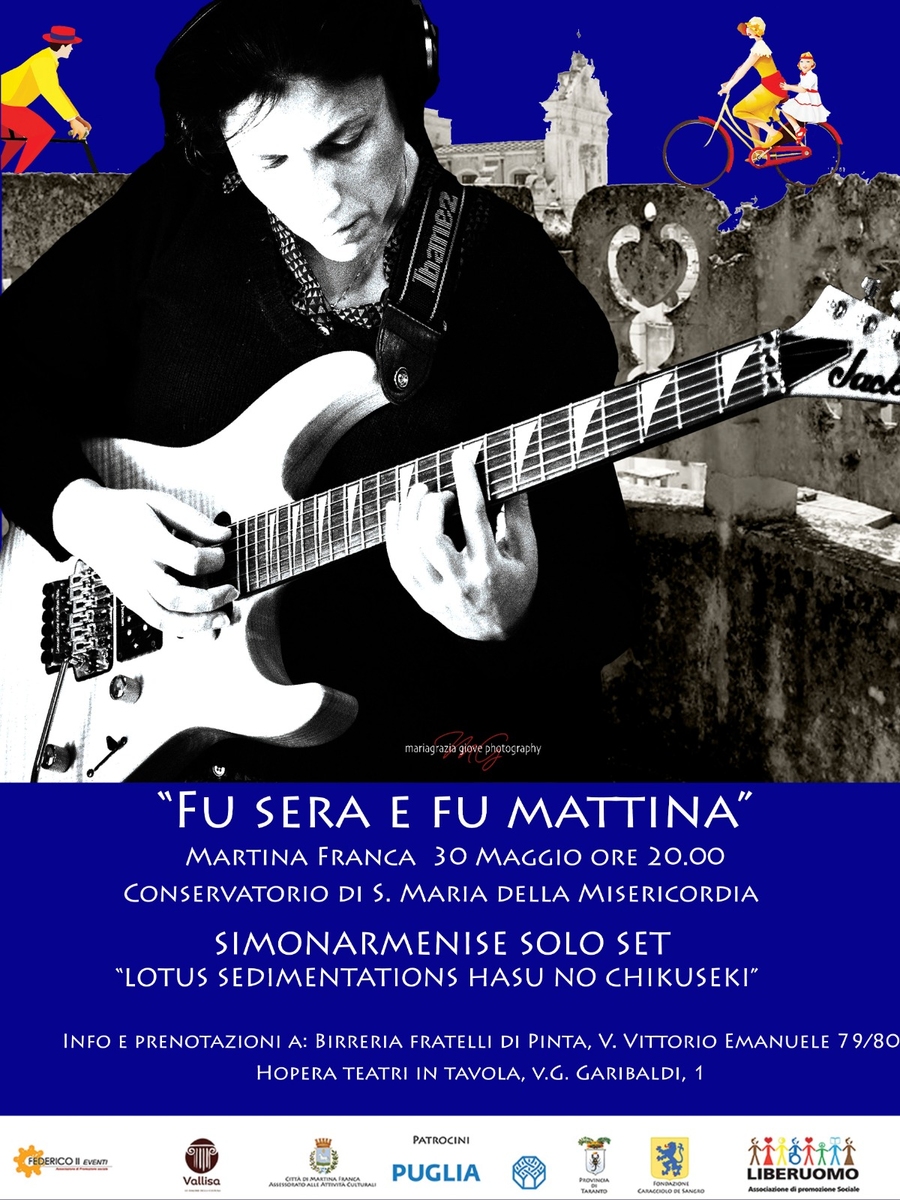
Music permeates the entire project with a widespread presence. Pianist Maestro Paolo Palazzo and vocalist Manuel Amati will present "Solfeggi Notturni," featuring the works of Aprile and Perla, two of the most significant composers from Martina Franca: pieces created for singing education, reinterpreted here in a non-philological reading. Almost entirely in modern premiere, the program invites the rediscovery and enhancement of the historical-musical heritage of the region, while the sounds of Simon Armenise and performances by Luna Dragonieri with the project TuaSorellaMinore construct soundscapes where electronics and video art interact immersively.
Alongside the artistic appointments, the program opens spaces for in-depth exploration and research. Meetings dedicated to the relationship between art, science, and spirituality, along with reflections on the persistence of the magical in Puglia's popular culture, bring to the forefront a dimension of knowledge rooted in the territory. They involve the Museo Etnografico "Alfredo Majorano," a civic institution of the Ionian area established in 2003 to preserve and enhance the demological collection named after the renowned Taranto scholar; the items displayed in the Museum articulate a precise narrative around magical-religious rituals and popular traditions in the area at least since the 18th century. The event recounts Maria Grazia Carriero's research project, which is conceived as an interdisciplinary investigation using contemporary art codes to explore and document the still-living popular beliefs in the Puglian territory. Through a two-year exploration, the artist has adopted dialogue as the primary investigative tool, collecting vast video and photographic documentation in the streets and homes of many municipalities in the provinces of Taranto, Bari, Brindisi, Lecce, and Foggia.
The focus of the research is the entity known as laùru (or with local variations such as jurj’, avurie, scarcagnulu, or scazzamurrieddhu), an ambivalent "little spirit" that inhabits the collective memory of communities at risk of extinction. The investigation does not limit itself to mere ethnographic collection but transforms testimonies into works of art, installations, and videos (such as the works Darkness and Parole a Sud), where the documentary and "rough" character of the footage aims to restore the freshness and pathos of daily encounters.
Exhibitions, displays, and cultural walks complete the journey, offering further opportunities for exploration. Fashion education through the MITA Moda Academy presents, in the evocative spaces of the Ducal Palace of Martina Franca, an exhibition dedicated to the contemporary reinterpretation of Carmen by Bisset. The setup offers a selection of outfits created by Academy students, modernly reinterpreting the opera's imagery, blending theatrical aesthetics with contemporary sensibilities. The focus is on the sartorial aspect of haute couture, expressed through refined craftsmanship, material research, and attention to detail, giving rise to creations that engage in a dialogue between tradition and innovation. The exhibition of traditional musical instruments and guided itineraries contribute to building a widespread narrative capable of engaging diverse audiences.
The project is realized with the economic support of the Municipality of Martina Franca and the moral support of the Puglia Region and the Province of Taranto, conceptualized by the Fondazione Caracciolo De Sangro, Aps Federico II, Aps Liberuomo, and Vallisa.
The initiative "Evening came, and morning followed" thus becomes a time to inhabit. Martina Franca welcomes this movement and expresses it through its spaces, its layers, its openings. It is a story that develops day by day, allowing connections, meetings, and new perspectives to emerge.
|
City: Martina Franca (Taranto)
Venue: Conservatorio S. Maria della Misericordia
Venue: Vico Monacelle 1
8:00 pm
paying entrance
10,00 euro
Info. 3389150260 - 3278859865
|
| |
|
|
21 views